|
| |
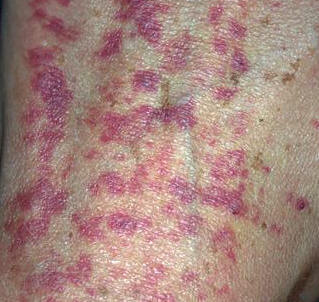
Allergic purpura Picture
Allergic purpura is an allergic disorder. The joints (usually knees, ankles, hips,
wrists, and elbows), the skin of the legs, thighs, and abdomen, the gastrointestinal
tract, and the kidneys are involved. Allergic purpura can affect both sexes, all ages, but
is more common in boys (2 to 8 years).
The picture above shows how allergic purpula can appear on
the skin.
"Purpura" is a bleeding disorder that occurs when capillaries rupture, allowing
small amounts of blood to accumulate in the surrounding tissues. In AP, this occurs
because the capillaries are blocked by protein complexes formed during an abnormal immune
reaction. The skin is the most obvious site of reaction, but the joints, gastrointestinal
tract, and kidneys are also often affected.
|